
By Federica Villareale, PhD at IULM University, Milan, Researcher at the International Center for Research on Collaborative Translation.

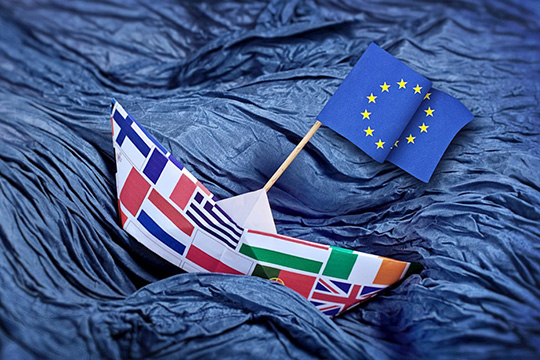
Source: https://en.interaffairs.ru/media/i/2020/08/the_crises_of_europe.jpg
The origins of the voluntary sector: from the earliest experiments to the emergence of federations
Studying European culture mainly involves understanding its self-representation (Lotman, 2022). Europe is not a fixed identity. It emerges from an ongoing tension between two forces. One is the desire for unity, a shared principle holding its parts together; the other is the need for articulation, which shows up differently depending on whether you are looking at politics, language, or culture. Chabod (1961) traced how this awareness gradually settled into European historiography. It has been acknowledged that Europe’s defining feature is the articulation of its political principles, unlike cultures governed by a single, stable principle. Crisis is not an anomaly here. It is a constant, and arguably the clearest way Europe pictures itself, caught permanently between unity and articulation.
Translators and interpreters fit this picture rather well. They act as boundary-crossers, working at the intersection of cultures and of internal and external spaces. Their organisational structures, too, mirror the broader European dynamic, caught between the pull toward federal unity and the pull toward divisive diversity.
The theme of crisis, which is woven throughout European intellectual history(1), also appears in the history of language professions. Like Europe, the realm of translation and conference interpreting has faced major crises: the IT revolution of the 1990s, the rise of machine translation, and today’s proliferation of large language models driven by artificial intelligence. Each of these crises has challenged the professional identity of translators and interpreters. The profession did not disappear in response, much as Chabod’s account of Europe would predict: it adapted, considering that professional judgement, contextual interpretation, ethical accountability and cultural mediation remain central to high-quality language work.
The profession’s modern foundation was laid in the 20th century amidst a growing international context of cultural exchange and the need for multilingual communication in new global organisations. As professionals sought recognition of the profession from governments and international groups, various national and international associations and federations emerged to coordinate representation and promote professional standards, ea ch of them very different in its organisation and associative model .
The early decades of the twentieth century in translation and interpreting replay the same tension Chabod traced through European history at large. There is a push to coordinate and speak with one voice. There is also the resistance to fragmentation that each national context keeps imposing. European culture endures its crises by staying inside that dialectic. The language professions, for their part, owe their collective identity to this very diversity of associative models rather than in spite of it.
>This article examines how European translation and interpreting associations and training networks have responded to fragmentation, technological change, and new demands for quality. It asks whether the current ecosystem provides sufficient coordination while preserving the professional, linguistic, and disciplinary diversity on which it is built. We will also propose potential improvements aligned with TEF2025 and the new 2026 EMT guidelines.
One Profession, Many Models: The Fragmented Landscape of European Translator Associations
The landscape of professional associations in Europe is marked by considerable structural diversity. Germany, with the BDÜ, is the clearest case of a centralised federal model: the association reports more than 7,500 members and is widely regarded as Germany’s most prominent professional body for translators and interpreters. In many other European countries, the picture is more plural and fragmented, with several parallel associations covering different specialisations (literary, legal, technical, audiovisual) or different professional segments (freelancers, companies), and no unifying umbrella organisation to bring them together.
In Italy, AITI (Associazione Italiana Traduttori e Interpreti), the country’s largest association with over 1,200 members, and ANITI (Associazione Nazionale Italiana Traduttori e Interpreti , established in 1956) work independently, without a federation connecting them. UNILINGUE is sometimes described as an umbrella organisation, although it primarily represents language service providers rather than freelancers and is affiliated with the EUATC (European Union of Associations of Translation Companies). Similarly, in France, the landscape is fragmented: the SFT, the ATLF for literary translators, and UNETICA for sworn translators operate separately. In Spain, diversity varies by region, with ASETRAD operating nationally and APTIC representing Catalan professionals.
Smaller language markets like the Netherlands (NGTV – Nederlands Genootschap van Tolken en Vertalers ), Sweden (SFÖ – Sveriges facköversättarförening), and the United Kingdom (ITI – Institute of Translation and Interpreting) have effectively established dominant associations that span the entire sector, even without formal federative structures. In the UK, the CIOL (Chartered Institute of Linguists), primarily focused on language certification and assessment, works alongside the ITI, serving as a functional complement in the absence of a formal institutional umbrella body.
Voices for Language Professionals: A Guide to Europe’s Translation Bodies
Beyond national borders, numerous European and international organisations have stepped in to represent and coordinate the work of translators and interpreters across the continent. These groups range from federations representing thousands of professionals to advisory committees influencing EU policies, each occupying a unique role in a complex, multi-layered system.
| Organisation | Field / Scope | Main Focus Area | Who They Represent | Why Interesting for Students and Researchers |
|---|---|---|---|---|
| FIT Europe | Translators & interpreters (general, second-tier federation) | Institutional lobbying in Brussels for professional recognition and workers’ rights | Approximately 40,000 language professionals via affiliated national associations | Good entry point for understanding EU-level advocacy structures and how national associations coordinate at a supranational level |
| CEATL | Literary translation | Working conditions, recognition of literary translators, promotion of translation from lesser-known into major languages | Approximately 12,000 individual literary translators via 38 national associations from 30 countries | Useful for researching linguistic diversity, cultural policy, copyright debates, and the relationship between human literary translation and AI-enabled tools |
| EULITA | Legal & judicial translation and interpreting | Access to justice across languages, tied to Directive 2010/64/EU | European associations of legal and judicial translators and interpreters | Relevant for studies on legal linguistics, access-to-justice policy, and regulatory approaches to AI in high-stakes settings |
| AIIC | Conference interpreting | Peer-selected professional community | Approximately 3,000 individual professionals, based in Geneva | Interesting case study of a different organisational model |
| EUATC | Language service providers (LSPs) | Traditional umbrella for national LSP associations | National LSP associations | Shows how the industry/business side of translation is structured, useful for market and industry-structure research |
| ELIA | Language service providers / industry | Events, research | Individual companies | Useful for research on industry data and cross-organisational collaboration in the language sector |
| GALA | Localisation & language technology | Broader global/tech focus: translation, localisation, internationalisation, language tech | Companies and professionals in localisation and language technology | Bridges traditional translation studies with software/digital localisation and tech research |
| LIND |
EU advisory body (not an association) |
Strategic guidance to DG Translation. | 12 industry experts advising the European Commission | Key for understanding EU policymaking mechanisms and how expert advisory bodies shape translation and interpreting policy |
| KCTI | EU knowledge / resource hub | Centralises resources, research, best practices, and tools | Professionals and academics in translation/interpreting | Direct research resource; a starting point for locating EU-curated data, studies, and best practices |
FIT Europe, the regional branch of the International Federation of Translators (FIT), represents approximately 40,000 language professionals in Europe through its affiliated national associations. These include translators, interpreters, terminologists, researchers, and trainers. Registered in the EU Transparency Register as a representative body, it engages in institutional lobbying in Brussels to advance the profession’s official recognition and protect workers’ interests in the sector. As a second-tier federation, FIT Europe does not directly admit individual professionals; instead, it coordinates national associations that represent the individual practitioners.
Literary translators have their own dedicated body in CEATL, the Conseil Européen des Associations de Traducteurs Littéraires , founded in Belgium in 1993. It currently brings together 38 national associations from 30 European countries, representing roughly 12,000 individual translators. Its primary aims are to enhance the working conditions and recognition of literary translators and to promote the translation of lesser-known languages into major ones, thereby supporting Europe’s linguistic diversity. CEATL also advocates for copyright and cultural policy issues across Europe. In the realm of artificial intelligence, it has taken a notably critical stance, publicly opposing initiatives such as Amazon’s Kindle Translate, which could undermine opportunities for human literary translation.
Legal translators in Europe are represented by the European Legal Interpreters and Translators Association (EULITA), founded in 2009 and established under the Criminal Justice Programme of the European Commission’s Directorate-General for Freedom, Security and Justice (project number JLS/2007/JPEN/249), which aims to ensure access to justice without language barriers. It unites European associations of legal and judicial translators and interpreters and is part of the EU Justice Forum. EULITA has argued that AI should not be used in judicial translation or interpreting without the involvement and oversight of appropriately qualified professionals.
AIIC works on a completely different logic. Rather than federating national associations, it admits individual professionals directly, a model unlike anything else covered so far. It is a community of over 3,000 professionals selected through peer-to-peer processes. Based in Geneva, AIIC primarily operates across Europe and has developed specific guidelines for sign language interpreting in collaboration with EFSLI (European Forum of Sign Language Interpreters , established in 1993) and WASLI (World Association of Sign Language Interpreters).
Regarding language service providers, three main European organisations exist. EUATC serves as the traditional umbrella for national LSP associations, including UNILINGUE in Italy and ATC (Association of Translation Companies) in the UK. ELIA (European Language Industry Association , 2005) is notable for allowing individual companies to join directly, without needing a national association, and is highly active with events and research, co-organising the ELIS (European Language Industry Survey). GALA (Globalization and Localization Association) has a broader global and technological focus, covering translation, localisation, internationalisation, and language tech development; it connects traditional language fields with the software and digital localisation industries.
The Language Industry Expert Group (LIND), established by the European Commission in 2014, is not an association; it is an advisory body. Twelve industry experts sit on it, chosen through an open application process, each serving a six-year term. It convenes three or four times annually in Brussels to offer strategic guidance to DG Translation. Its 2024–2025 work plan focuses on four main areas: promoting traineeships, training trainers (Train-the-Trainer), enhancing the profession’s visibility, and developing the KCTI. The Knowledge Centre on Translation and Interpretation (KCTI), launched in 2025 following the merger of the former KCI with DG Translation, serves as the Commission’s official information and resource hub, integrating resources, research, best practices, and tools for both professionals and academics.
1. Strengths and weaknesses of the European association system
The European association ecosystem draws its core strength from working across several levels simultaneously. AIIC covers individuals. FIT Europe, CEATL and EULITA work through national associations. EUATC and ELIA speak for companies. LIND and KCTI operate at the institutional level. Professionals, academics and companies all end up with some form of representation as a result.
National fragmentation has not gone away, though. Italy is one of several countries with no single professional association to speak for the field, which weakens its bargaining leverage with governments and clients. There is also a deeper tension built into the system, between the organisations that speak for freelancers and those that speak for the companies that hire them: ELIS 2026 data show that 62% of freelance translators named low agency pay as their main difficulty in dealing with sector businesses. The same survey paints a fairly stark picture of the traditional market in decline, with just 10% of independent professionals saying AI has actually benefited them, while companies tend to be considerably more optimistic about folding AI into their workflows.
2. Commitment to minority and accessible languages
The organisations reviewed appear to devote comparatively limited explicit attention to minority languages and accessible communication, marking a key weakness in the overall ecosystem. Although the Indigenous Languages Standing Committee at the global FIT level addresses indigenous languages, its focus is mainly on non-European languages from Latin America, Africa, and Asia. In Europe, the review did not identify a major national association with a clearly articulated, Europe-wide programme dedicated specifically to regional and minority languages such as Basque, Breton, Friulian, or the Valcanale dialect of Slovenian.
CEATL contributes indirectly yet significantly to this cause by encouraging literary translation from less-used languages into major ones. Without this effort, literature in minority languages would remain inaccessible to the European audience. Nonetheless, this outcome is a beneficial side effect of its primary mission, not a direct goal of preserving languages.
The disparity is even clearer regarding accessible and inclusive language, such as easy-to-read, plain language, and augmentative and alternative communication. Among the associations reviewed, formal programmes specifically dedicated to easy-to-read language, plain language or augmentative and alternative communication appear limited; these areas are mainly overseen by third-sector organisations such as Inclusion Europe. The only area somewhat related is sign language: AIIC has issued guidelines on positioning sign language interpreters at conferences, and EFSLI focuses on professionalising and certifying sign language interpreters across Europe. Notably, the draft of EMT Competence Framework 2026 explicitly recognises accessible communication and audiovisual and digital accessibility as key transferable skills, reflecting increased awareness of these issues in training.
However, representing the profession is only half the picture. Before translators and interpreters can be represented, they must first be trained. We now turn to the networks that shape this training.
Many Networks, One Profession: Mapping Europe’s Translator and Interpreter Training Landscape
Translation and interpreting are fields that rely on extensive training, with several specialised networks across Europe dedicated to maintaining and enhancing training standards. Rather than a single unified system, these networks serve distinct roles, influenced by their origins, governance models, and academic focuses. Collectively, these networks create a complex, sometimes overlapping landscape that mirrors the diversity of the translation and interpreting profession.
|
Organisation/ Network |
Members or participants | Main Field | Why It’s Interesting for Students & Researchers |
|---|---|---|---|
| EMT | University translation programmes | Training and competences | Helps identify master’s programmes and the competences expected in the European market |
| EMCI | Universities and conference interpreting programmes | Interpreting | Relevant to students considering conference interpreting and wishing to understand the profile of EMCI-type programmes |
| CIUTI | Specialised university institutes | Training and research | Useful for understanding standards of academic excellence and international networks |
| EST | Translation Studies researchers | Research | Central for those pursuing a PhD or aiming to enter the scientific community |
| PETRA-E | University programmes in literary translation | Literary translation training and competence frameworks | Offers a specific competence framework for literary translation education, a field not centrally addressed by EMT or EMCI, offering a common European framework of competences specifically for literary translation education |
1. Quality labels for universities: EMT – European Master’s in Translation, EMCI – European Master’s in Conference Interpreting, and CIUTI – Conférence Internationale Permanente d'Instituts Universitaires de Traducteurs et Interprètes
The EMT, established by the European Commission’s Directorate-General for Translation in 2006, serves as a quality label. At the time of writing, the EMT network comprises 81 programmes at 79 universities in 24 countries in Europe and beyond. Its primary aim is to enhance the quality of translator training, helping recent graduates enter the job market in line with the needs of European institutions and the private sector. Universities accredited with the EMT may display the logo (a registered EU trademark) and join a network that convenes twice a year to exchange best practices. To qualify, programmes must belong to an officially recognised master’s programme in translation that has graduated at least two cohorts of students. The focus remains primarily European, with some non-EU programmes in Switzerland (though these have been interrupted due to bilateral negotiations) and in Lebanon.
The EMCI is a consortium of sixteen universities offering a master’s programme in conference interpreting, and also refers to the Master’s-type university programme which was launched as a pilot project by the DG-SCIC (Directorate-General for Interpretation) of the European Commission and the DG-LINC (Directorate-General for Logistics and Interpretation for Conferences ) of the European Parliament in 1997. Unlike the EMT, which is a label with standardised admission criteria, the EMCI is a closed consortium that pursues a common policy on student recruitment and assessment. Its members, which include the University of Bologna, the School of Modern Languages for Interpreters and Translators in Trieste, the University of Geneva, KU Leuven, Charles University in Prague, and Stockholm University, represent the primary European academic traditions in conference interpreting. Funding from the Commission and Parliament provides the EMCI with privileged access to European institutions for work placements and mock sessions.
CIUTI predates all of these. Founded in 1960 by six European universities, it remains the oldest and possibly the most selective academic network in the field. Unlike the EMT, CIUTI operates independently of the European Commission and imposes more stringent admission standards. The membership process involves three stages: submitting an initial report, a self-assessment report, and an on-site evaluation. High standards in training and research are essential. The network’s membership is truly global, encompassing both translation and interpreting disciplines. The theme for the CIUTI 2026 conference, held in Milan at IULM University (T&I, AI, and the Language Industry: Aligning Research, Training and Professional Practice ), illustrates the network’s capacity to anticipate and address key sector challenges.
2. Other associations and networks for translation training: EST – European Society for Translation Studies, and PETRA-E – Plateforme Européenne pour la traduction littéraire – Education
Founded in Vienna in 1992, the EST stands out among the examined networks for lacking a direct educational mandate. Instead, it focuses on promoting Translation Studies as an academic discipline. The EST hosts international conferences every three years, awards prizes to early-career researchers, and offers summer scholarships to support PhD students. It also fosters collaboration among universities through international doctoral programmes. With over 300 members in more than 40 countries, the EST plays an essential, though indirect, role in education: research generated by the EST community influences the curricula of training networks.
Literary translation training has its own platform too: PETRA-E. Its founding members have developed a common framework of competences for university programmes in literary translation. PETRA-E receives partial funding from Erasmus+ and collaborates with the European School of Literary Translation. It covers an area of education that neither the EMT nor the EMCI systematically addresses.
3. Common features and key differences
All networks share the core goal of enhancing the quality of training in translation and interpreting, each using different methods. They are all rooted in higher education, with no individual professionals or non-academic organisations accepted as full members. A major commonality is their collective approach to artificial intelligence: all have foregrounded AI in recent activities, conferences and policy discussions. Many universities, too, belong to more than one network at once (Trieste has been part of EMT, EMCI, and CIUTI since their inception, while IULM University is part of both EMT and CIUTI). Overlapping membership like this suggests these networks are seen less as rivals and more as different rooms in the same house.
A few differences stand out. The first concerns legal status and governance: the EMT and the EMCI are direct extensions of European institutions and receive funding from the Commission and Parliament, whereas the CIUTI and the EST are fully independent, with practical consequences for non-European countries, such as Switzerland.
The organisations’ focus is different. While EMT and EMCI are explicitly vocational, with employability being their central criterion, CIUTI requires excellence in both teaching and research. EST is entirely focused on scientific research and does not train translators; it studies translation as an academic subject.
Differences in disciplinary scope are evident based on each organisation’s focus. EMT specialises only in written translation; EMCI in conference interpreting; CIUTI encompasses both areas; and PETRA-E is dedicated exclusively to literary translation. A literary translator who also works as a legal interpreter, in other words, has to move between two entirely separate educational systems, as there is no single framework that covers both.
Finally, selectivity levels differ considerably: the EMT uses a standardised application process with applications invited every five years; the CIUTI is more selective, evaluating applicants individually through on-site assessments; the EMCI functions as a closed consortium; and the EST welcomes all researchers interested in Translation Studies.
Proposals for improvement: the recommendations of TEF2025 and the new EMT Framework 2026
1. Translating Europe Forum 2025 review
The Translating Europe Forum 2025 (TEF2025) took place in Brussels from November 5 to 7, 2025, attracting over 70 speakers and approximately 2,000 participants, both on-site and online. It functions as the primary platform for discussions on Europe’s translation and interpreting sectors. Now in its twelfth edition, this event was organised by the European Commission’s Directorate-General for Translation and focused on the theme Quality Matters: Perspectives from across the Language Industry Landscape . The forum featured three key thematic sessions: simple language (Clear Language @ TEF), AI-driven quality improvements, and future-oriented training.
The European Commission’s official report on TEF2025 distils its key insights into a handful of main points, centred on quality, AI, and the changing role of translators. The widespread use of AI does not remove concerns about bias, transparency, accountability and quality. Language models often inherit and magnify biases from their training data, which is exactly why language professionals cannot afford to simply adopt these tools; they need a hand in shaping them. A broader claim runs through the report too, one worth sitting with: translation functions as public infrastructure, with real stakes for humanitarian work and human rights. Clear language, paired with high-quality translation, builds trust in public institutions, which the report treats as almost self-evident. In short, language professionals have not become less necessary. They have become necessary in a different way. The profession is being reconfigured rather than simply displaced.
Regarding training, TEF2025 included sessions on connecting industry and academia, such as Industry meets academia: enterprise-grade localisation 101 (Laurenti & Villareale, 2025), and on training trainers (Training the trainers – wherever they may be). These sessions recognise something important: skill development needs ongoing support beyond universities if professional growth is going to keep pace across Europe.
2. The new EMT 2026 Competence Framework
The draft EMT Competence Framework 2026, updated by the EMT Competence Task Force in May 2026, outlines a proposed reference framework for university-level translator education. It introduces notable changes compared to earlier versions from 2009, 2017, and 2022. The definition of ‘translator’ has been explicitly expanded to include roles such as transcreators, multilingual technical writers, content creators, terminologists, project managers, and related specialists, a sign of how far the market has moved toward high-value language services. Competencies are grouped into five interconnected areas: Linguistic and Cultural; Transfer; Technological and Digital; Subject-Specific and Research; and Interpersonal and Service Management. The framework emphasises a balance between technological skills and human competencies, insisting that the translator's profile cannot be reduced to technological proficiency alone. For the first time, accessible communication is included as a transferable skill.
Particularly significant is that the draft framework identifies the ethical use of technology as a core competence, including issues such as data protection, bias mitigation, transparency, accessibility, responsible data sourcing and effects on professional practice (Skill 12 of the EMT Competence Framework 2026). The overlap with TEF2025’s own themes is hard to miss, and it says something about how closely the forum’s discussions and the regulatory review of curricula are now aligned.
3. Six Questions for the Future of European Translation Education and Professional Representation
Drawing from the new EMT 2026 Framework, TEF2025 recommendations, and the structural issues in Europe’s education system, the following areas are prioritised for action:
How can Europe support continuing professional development for translation and interpreting trainers? TEF2025 dedicated a session to training trainers, highlighting that the main challenge in updating curricula is not a lack of theoretical frameworks but the difficulty for university lecturers in staying current with industry tools and practices. A possible next step would be to explore whether a permanent European platform for the continuing professional development of translation and interpreting lecturers could be developed jointly by existing networks. This platform would be managed collaboratively by EMT, CIUTI, and EMCI, with funding from Erasmus+, and a Europe-wide system for recognising training credits would need to come with it.
How can universities and language-service providers cooperate without reducing education to short-term market needs? The Industry meets academia panel at TEF2025 highlighted that enterprise-grade localisation remains underrepresented in university curricula. It was proposed to make a formal partnership agreement with at least one language services company, a condition for renewing the EMT label, with a minimum number of co-designed teaching hours built into the requirement.
How can traineeships be more accessible, transparent and educationally meaningful? The LIND 2025–2026 initiative focuses on creating an internship platform in partnership with the EMT, linking it to ELIS data to track real-time demand for emerging professional roles such as post-editors, language data trainers, and AI quality assessors. It also aims to make internships mandatory for obtaining qualifications in EMT programmes.
How can translation education integrate minority languages, plain language and accessible communication? TEF2025 emphasised clear language as a key theme throughout the conference. The EMT 2026 Framework references barrier-free communication but lacks specific, measurable competencies. It is recommended to include at least one mandatory module on accessible communication within the EMT assessment criteria, alongside a dedicated section for translation to and from European regional and minority languages, developed in partnership with PETRA-E and CEATL, with scholarships funded by the Creative Europe programme.
What should ethical and critical AI literacy mean in translator training? TEF2025 highlighted that AI systems amplify existing biases and that language professionals must be active participants in the creation of language models, not merely passive users. It is proposed to introduce a specific module on language data management, data bias, and collaboration with language model developers into EMT programmes, aligned with Skill 12 of the new EMT 2026 Competence Framework.
How can EMT, EMCI, CIUTI and other networks cooperate while retaining their distinct missions? The existing European training structure consists of three separate networks that lack a formal coordinating body. One possible avenue would be to explore a light coordination mechanism bringing together EMT, EMCI and CIUTI, with input from KCTI and LIND. Rather than creating a new centralised body, such a mechanism could facilitate dialogue on quality benchmarks, overlapping affiliations and shared annual reporting on developments in translation and interpreting education.
Some conclusions
The history of Europe’s translation and interpreting sector reflects a culture that defines itself through crises but remains resilient. As Chabod noted about European identity, the language professions have stayed cohesive despite fragmentation and internal conflicts. The tension among the German federal approach, Italian or French diversity, professional and business associations, and Commission-funded training networks and independent groups like CIUTI is not a design flaw. If anything, it is the system working as intended.
The current situation marks a new chapter in the European story of crisis. Large language models are, in a sense, just the latest variation. They raise concerns about the automation of linguistic processes that require contextual, cultural and ethical judgement. TEF2025 acknowledges as much, and rightly so: AI is made of language, and language experts need to learn how to use it and, even more so, need a role in building it.
Chabod’s account of Europe’s capacity to endure crises by balancing unity and diversity, avoiding the extremes of empire (which suppresses differences) and the nation state (which leads to fragmentation without shared ground) could offer a useful framework for the language professions as they address current challenges. The imperial extreme involves enforcing total standardisation from above: a single framework and a single technological platform that absorbs all disciplinary and cultural differences. Conversely, the risk of fragmentation entails a lack of communication among associations, disconnected training networks, and professionals responding individually to collective challenges.
The reform proposals in this essay aim to find a middle ground. The Train the Trainer platform, the European Training Coordination Council, and the systematisation of EMT-LIND placements do not intend to merge what should stay separate; instead, they serve as tools to create durable channels of cooperation where coordination remains limited. Likewise, expanding the EMT Framework to cover accessible communication and minority languages is not mission creep. It is a recognition that Europe’s linguistic diversity is worth protecting in its own right, not simply a resource to be used.
The EMT 2026 Competence Framework expands the concept of a translator. Swapping words from one language into another is no longer the whole job, if it ever really was. Translators now operate at the semiotic border between cultures, ensuring meaning survives the crossing and that communication still feels human, even when the tools involved are not. Lotman (2022) would likely recognise this figure as vital to the European semiosphere, as a mediator facilitating dialogue between the familiar and the foreign, the same and the different.
Beyond the historical and structural analysis offered above, this ecosystem translates into concrete choices for anyone entering the profession today. Three questions should guide that navigation: which skills to build, which networks to join, and which questions to ask before committing to a programme or a traineeship.
As confirmed by the EMT 2026 Competence Framework draft, students should seek out programmes that explicitly teach technological and digital fluency (including post-editing and working with language data, not just CAT tools), subject-specific research skills tied to a real specialisation, and the ethical use of AI in translation, covering data protection, bias mitigation, and transparency. Accessible communication is now formally recognised as a transferable skill, yet still rarely taught systematically: a programme that offers it is worth extra consideration, since it points to a labour-market gap rather than a curriculum trend.
No single organisation covers a student’s whole trajectory, so it helps to think in layers. For training, they should consider what affiliation with, or recognition by, EMT, EMCI and CIUTI may signal about a programme’s orientation and network. F or their professional development after graduation, students can follow the work of bodies such as AIIC, CEATL and EULITA, identify the relevant national associations in their country or specialisation, and explore the routes through which professional communities are represented at European level. Watching ELIS survey data is also a low-cost way to track which skills the market is actually paying for, rather than relying on a single university’s curriculum.
The point is that the fragmented landscape described in this article is navigable, provided students treat it as a set of deliberate choices rather than a maze to get lost in.
The European ecosystem of translation and interpreting, comprising associations, training networks, institutions, and professionals, is part of the cultural infrastructure that allows Europe to remain recognisably itself: plural, unevenly coordinated and resilient.
- See Nietzsche (1888); Husserl (1936); Zweig (1942); Ortega y Gasset (1930).↩
References
Chabod, F., Storia dell’idea d’Europa , Laterza, Bari, 1961.
Crepaldi, M., ‘Rethinking Clarity, Translation and Quality with AI at the Translating Europe Forum 2025.’ Medium / Skyscanner Experience, December 2025.
European Commission: Directorate-General for Interpretation (SCIC), Interpreting Europe Conference 2025 , Brussels, 6 – 7 February 2025, https://commission.europa.eu/get-involved/events/interpreting-europe-conference-2025-02-06_en.
European Commission: Directorate-General for Translation, Echoes of the 2025 Translating Europe Forum , 24 February 2026, https://translation.ec.europa.eu/news-and-events/events/echoes-2025-translating-europe-forum-2026-02-24_en.
European Commission: Directorate-General for Translation, European Master’s in Translation (EMT), https://translation.ec.europa.eu/get-involved-european-language-activities-and-initiatives/european-masters-translation_en.
European Commission: Directorate-General for Translation, Knowledge Centre on Translation and Interpretation (KCTI), https://knowledge-centre-translation-interpretation.ec.europa.eu.
European Commission: Directorate-General for Translation, Translating Europe Forum 2025 – Quality Matters, Brussels, 5–7 November 2025, https://translation.ec.europa.eu/2025-translating-europe-forum-quality-matters_en.
European Commission: Directorate-General for Translation, What to expect when you are expecting TEF?, 13 October 2025, https://commission.europa.eu/translating-europe-forum-tef/what-expect-when-you-are-expecting-tef-2025-10-13_en.
European Commission: LIND Expert Group, Work Programme 2024–2025 (PDF), https://knowledge-centre-translation-interpretation.ec.europa.eu/sites/default/files/ckeditor5-files/LIND%20Work%20Programme%202025.pdf.
European Language Industry Survey (ELIS) 2026, https://elis-survey.org/wp-content/uploads/2026/03/ELIS-2026-Report.pdf.
European Master’s in Translation, Competence Framework 2026, Unpublished d raft document.
Husserl, E., La crisi delle scienze europee e la fenomenologia trascendentale, Il Saggiatore, Milano, 2015 (1936).
Laurenti, F. & Villareale, F., Enterprise-Grade Localization 101: A Pilot Training Project to Link Academia and Industry held at IULM University in Milan, KCTI Blog, 2025, https://knowledge-centre-translation-interpretation.ec.europa.eu/en/content/enterprise-grade-localization-101-pilot-training-project-link-academia-and-industry-held.
Lotman, J., Semiosfera: asimmetria e dialogo nelle strutture pensanti, La nave di Teseo, Milano, 2022.
Lotman, J. & Uspenskij, B., Tipologia della cultura , Bompiani, Milano, 2001.
Nietzsche, F., Ecce Homo, Adelphi, Milano, 1969 (1888).
Official recordings of TEF2025 (YouTube). https://www.youtube.com/playlist?list=PLLqIRaiVCGCTdO8g-L0sqq79Or_lpwYsu.
Ortega y Gasset, J., La ribellione delle masse, SE, Milano, 2001 (1930).
Txabarriaga, R., ‘Here’s What We Learned at the Translating Europe Forum 2025’, Slator, 17 November 2025, https://slator.com/heres-what-we-learned-at-the-translating-europe-forum-2025/
Venuti, L., The Translator’s Invisibility, Routledge, Londra, 1995 .
Zweig, S., Il mondo di ieri. Ricordi di un europeo , Garzanti, Milano, 2014 (1942).
Details
Languages: English
Publication date: 29 September 2026
EMT Category: Translation competences