
What is consecutive interpreting?
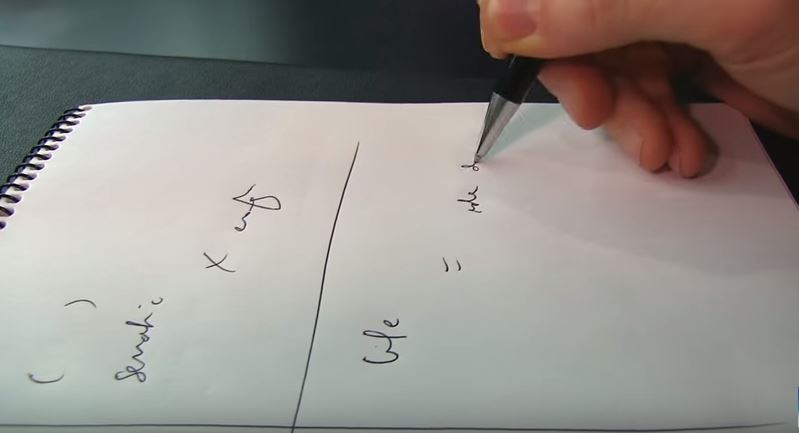
Consecutive interpreting is a mode of interpreting in which the speaker makes a speech (or says a few sentences) while the interpreter takes notes. The interpreter then reproduces what the speaker has said for the audience in another language.
The interpreter usually stands or sits close to the speaker, uses a pen and paper to take notes and uses the microphone (if there is one) once the speaker has finished and it is their turn to speak. While there are different technological solutions available for consecutive interpretation, the interpreter using them still needs to master the skills described below, while also being a proficient user of the tool being used.
In certain set-ups (e.g. longer keynote speeches), a bidule (portable interpretation equipment without a booth) may also be used.
The essential skills
To be a good consecutive interpreter, you must be able to:
- listen very actively, analysing what the speaker is saying
- make notes that will jog your memory of the speech as you give it back
- deliver the speech as if it were your own in your active language
For each of these three actions, a number of different skills are involved beyond understanding the passive/foreign language.
Listen
A consecutive interpreter first has to learn how to listen actively. This might sound straightforward, but interpreters listen in a very different way to other people because the purpose of listening is different (this is similar to how a psychoanalyst also has a special way of listening to people). Interpreters are not listening to react or join in the conversation, they are listening so that they can remember and then accurately and faithfully reproduce what was said in another language (as psychoanalysts listen for clues as to their patient’s mental state).
To learn this special skill, interpreters are first taught how to reproduce a speech without taking notes. In the Speech Repository, there are examples of speeches that can be used for this purpose under the ‘basic’ and ‘beginners’ categories. When this has been mastered, interpreters will go on to learn note-taking.
Analyse
Note-taking is part of the second phase of analysis. It requires the interpreter to be able to prioritise information, distinguish between primary and secondary information and clearly note down who said what, when something happened, the speaker’s opinion, etc. (who, what, when, where, how).
Reproduce
The third and final phase of reproducing what has been said requires different skills. These include the ability to access short-term memory, understand your notes and communicate in an engaging way. Stress management and voice care are an important part of this process too.
Consecutive interpreting requires acquiring a combination of different skills. While speaking more than one language is fundamental, it’s just one part of the job. There are many universities that offer courses in conference interpreting.
On the SCICtrain video page, there is a whole chapter on consecutive interpreting. The ORCIT website also has modules on this topic, and some of DG Interpretation’s training material is also available on this platform.
For more detailed information, you can consult a large number of books on consecutive interpreting, including those that focus on note-taking. You can find the names of some of them and additional useful resources on our pages on books and e-books and articles and journals.